
| Eakring Hoverflies 2002-2010 |
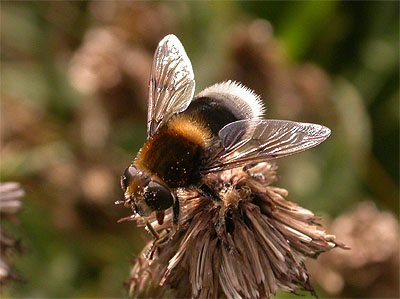 |
Hoverflies make an interesting
subject for those wishing to try their hand at something
different in natural history study. Although many species
are extremely difficult to identify without the use of a
microscope and scalpel, there are sufficient species
presenting less of an identification challenge. Some species (most frequently the bumblebee mimics) show considerable variation in markings, which can lead to some identification difficulties and a very common ID problem with members of the public, is to immediately categorise any yellow and black insect as a wasp. Adult hoverflies are particularly fond of nectar and certain types of flowers attract certain species of hoverflies. Hedgerows or woodland where Umbellifers grow are good places to look and Creeping Thistle is another good attraction. |
|
| ... | ||
| Hoverflies
belong to the order Diptera (Flies)
family Syrphidae and the current UK list contains just
over 275 species, among which are contained several regular migrants.
Adult hoverflies are particularly fond of nectar and regularly visit flowers
and
Umbellifers are a particular attraction
to the adults of many species. Hoverfly larvae live in a
range of habitats, from stagnant water, manure heaps, inside the nests of bees and wasps
and on vegetation. Like any group of insects, there are also some migrant species to look out for. Two regular migrant hoverflies are Episyrphus balteatus and Scaeva pyrastri. The former of these two, often arrives in vast numbers which supplement the resident population. It is by far the commonest species likely to be encountered at any location in Nottinghamshire. However, whilst sifting through the large numbers of balteatus, one can find some truly fabulous looking hoverflies. Selected species include the strikingly marked Chrysotoxum festivum, Dasysyrphus pinastri and the scarce Leucozona glaucia, which is one of the few hoverflies to show a blue colouration. None of these three have yet to occur in the Eakring area, but have been found at other Nottinghamshire sites close by. |
| ... |
| Eakring
and Kersall hoverfly species list, their current area
status and records The identification of the area's hoverflies began in late 2005 when we started to photograph an increasing array of insects and wildlife. Although at that time, the desire to put a name to any particular species was little more than a casual one, our interest in hoverflies deepened over the ensuing Winter. After purchasing Stubbs and Falk's book British Hoverflies, the identification of species then became much easier. The following list contains
|
| ...................................................... | |||||||
| Bacchini | |||||||
| Baccha elongata | 2006 | Scarce and obviously overlooked | |||||
| ....... | |||||||
| Melanostoma scalare | 2006 | Very common | 2007 records Numerous adults at Hare Hill Wood, 07/04/07 2008 records Common at Eakring Meadows and other sites, 15/05/08 | ||||
| ....... | |||||||
| Platycheirus clypeatus | 2006 | Common | 2008 records Several adults at Eakring Flash, 11/10/08 | ||||
| Syrphini | |||||||
| Chrysotoxum bicinctum | 2009 | Scarce | 2009 records An adult at Lound Wood, 19/07/09 | ||||
| ....... | |||||||
| Dasysyrphus albostriatus | 2006 | Scarce | 2006 records An adult at Penny Pasture Common 29/07/06 | ||||
| ....... | |||||||
| Dasysyrphus tricinctus | 2006 | Uncommon | |||||
| ....... | |||||||
| Epistrophe elegans | 2006 | Common | |||||
| ....... | |||||||
| Epistrophe grossulariae | 2006 | Common where it occurs | |||||
| ....... | |||||||
| Episyrphus balteatus | 2002 | Abundant | 2007 records Adult in Lound Wood, 08/03/07; Common everywhere 28/06/07 2008 records Four at Hare Hill Wood 08/06/08 2009 records Immensely common throughout the area, with hundreds around sections of old hedgerows at Eakring Flash and along Lound Wood 25/07/09 | ||||
| ....... | |||||||
| Eupeodes corollae | 2006 | Common, but easily overlooked amongst similarly marked species | 2007 records Adult along southern-edge of Hare Hill Wood, 24/03/07, Adult along edge of Hare Hill Wood, 28/04/07 | ||||
| ....... | |||||||
| Eupeodes luniger | 2006 | Scarce, with Lound Wood and probably Hare Hill Wood being the most regular sites | 2007 records Two adults at Hare Hill Wood, 19/04/07 2008 records Several adults at Eakring Meadows and one at Tug Bridge Farm 15/05/08 | ||||
| ....... | |||||||
| Leucozona lucorum | 2005 | Common. Lound Wood and along the old hedge at Eakring Flash being guaranteed sites | 2007 records Adult at Red Hill, 26/04/07 2008 records Adult at Lound Wood 15/05/08; Adult near Kersall 08/06/08 | ||||
| ....... | |||||||
| Melangyna umbellatarum | 2007 | Scarce, with one record. | 2007 records Adult at Eakring Meadows, 12/05/07 | ||||
| ....... | |||||||
| Meliscaeva auricollis | 2006 | Common | 2007 records Common along edges of Hare Hill Wood, 28/04/07 2008 records Common at Eakring Flash, 11/05/08; Abundant at Eakring Meadows 15/05/08 | ||||
| ....... | |||||||
| Scaeva pyrastri | 2006 | Migrant. Became increasingly regular during July 2006 | 2006 records One at Red Hill 26/07/06 2009 records One near Eakring Flash 25/07/09 | ||||
| ....... | |||||||
| Sphaerophoria scripta | 2005 | Common | |||||
| ....... | |||||||
| Sphaerophoria interrupta | 2006 | Very common | |||||
| ....... | |||||||
| Syrphus ribesii | 2004 | Common | 2007 records Several adults at Hare Hill Wood, 07/04/07 2008 records Adults common in most areas, 10/05/08 | ||||
| ....... | |||||||
| Syrphus vitripennis | 2006 | Common | 2008 records Adult at Hare Hill Wood, 14/03/08; Numerous at Lound Wood 15/05/08 | ||||
| Cheilosiini | |||||||
| Cheilosia grossa | 2007 | Common | |||||
| ....... | |||||||
| Cheilosia illustrata | 2006 | Common | 2007 records Adult at Hare Hill Wood 28/04/07 2008 records Adult at Lound Wood 15/05/08; Adults common at all sites on Hogweed 08/06/08 | ||||
| ....... | |||||||
| Ferdinandea cuprea | 2006 | One record | 2006 records An adult at Eakring Meadows 27/07/06 | ||||
| ....... | |||||||
| Rhingia campestris | 2006 | Common | 2007 records Several adults along edge of Hare Hill Wood, 19/04/07 2008 records Several adults at Eakring Flash, 11/05/08; Eight at Lound Wood 15/05/08 | ||||
| Eristalini | |||||||
| Eristalis horticola | 2006 | Scarce | |||||
| ....... | |||||||
| Eristalis interruptus | 2006 | Common | 2007 records Adult at Eakring Meadows, 02/05/07 2008 records Adult at Lound Wood 15/05/08; Four at Hare Hill Wood 08/06/08 | ||||
| ....... | |||||||
| Eristalis intricarius | 2006 | Scarce | |||||
| ....... | |||||||
| Eristalis pertinax | 2007 | Very common/abundant | 2007 records Adults abundant at Hare Hill Wood, 06/05/07 2008 records Adult at Hare Hill Wood, 09/02/08. 2009 records Five at Lound Wood, 19/07/09 | ||||
| ....... | |||||||
| Eristalis tenax | 2005 | Very common/abundant | 2007 records Adult along southern-edge of Hare Hill Wood, 02/03/07; Two adults at Hare Hill Wood 14/03/07 2008 records Adult at Hare Hill Wood, 09/02/08; Two adults at Hare Hill Wood, 14/03/08; Numerous at Hare Hill Wood 08/06/08 2009 records Adult at Eakring Flash 29/03/09. 2009 records Two adults at Lound Wood, 19/07/09 | ||||
| ....... | |||||||
| Helophilus hybridus | 2007 | One record | 2007 records Adult at Eakring Meadows 05/08/07 | ||||
| ....... | |||||||
| Helophilus pendulus | 2005 | Common | 2007 records Numerous adults along edge of Hare Hill Wood, 19/04/07; 100+ at Eakring Meadows 05/08/07 2008 records Adult at Eakring Flash, 11/05/08; Adult at Eakring Meadows 15/05/08; Three at Hare Hill Wood 08/06/08 | ||||
| ....... | |||||||
| Helophilus trivittatus | 2006 | Scarce | 2007 records Two adults at Eakring Flash 28/06/07; Three at Eakring Meadows 05/08/07 | ||||
| ....... | |||||||
| Parhelophilus frutetorum | 2006 | Common | 2007 records Several adults at Eakring Flash 28/06/07 | ||||
| ....... | |||||||
| Myathropa florea | 2006 | Scarce | 2007 records Numerous adults at Hare Hill Wood, 06/05/07 2008 records Two adults at Hare Hill Wood 08/06/08. 2009 records An adult at Lound Wood, 19/07/09 | ||||
| Volucellini | |||||||
| Volucella bombylans | 2006 | Common | 2007 records Three adults at Lound Wood 28/06/07 2008 records Adult at Hare Hill Wood 08/06/08 | ||||
| ....... | |||||||
| Volucella pellucens | 2006 | Common | 2007 records Several adults in the Lound Wood and Eakring Flash area 28/06/07; Adult at Eakring Meadows 05/08/07 2008 records Two adults at Hare Hill Wood 08/06/08. 2009 records Two adults at Lound Wood, 19/07/09 | ||||
| ....... | |||||||
| Volucella inanis | 2006 | One record from Eakring Meadows in 2006 | |||||
| Xylotini | |||||||
| Syritta pipiens | 2006 | Very common | |||||
