
| Soldier Beetles in Nottinghamshire |
| ... |
| There are about 40 UK species of
Soldier Beetles which belong to the Cantharidae family
of beetles. Many species are common in
Nottinghamshire and are a frequent sight on thistles and
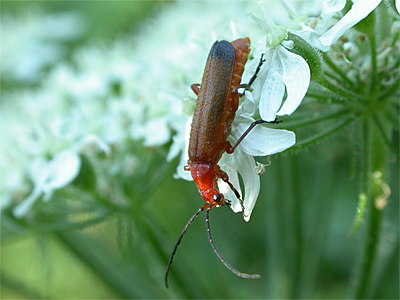
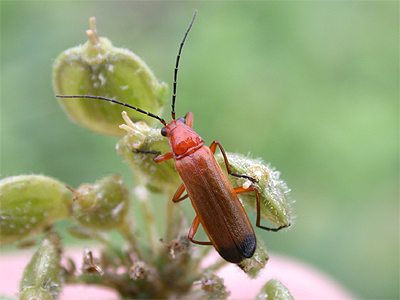
umbelliferous flowers during the Summer months. Some red coloured Soldier Beetles (notably Rhagonycha fulva) were often commonly referred to as Bloodsuckers by schoolboys, but they are completely harmless. The identification of individual species is not always easy, walthough with practice, many species can be readily identified in the field. There are certain pitfalls (such as variation within individuals of a species) when identifying any Soldier Beetle, but the purpose of showing them collectively here, is to create awareness of the range of species found within most areas of the Nottinghamshire countryside. |
 |
|
| ... | ||
| Markings and sizes vary per species and (as in most insects) there are also variations within species. Most are easily found on long grass, flower heads and other foliage. They are generally conspicuous beetles and in the case of Rhagonycha fulva, often sufficiently common enough to the point of being abundant at any one site during the late Summer. | ||
| ... |
 |
 |
|||
| ... | ||||
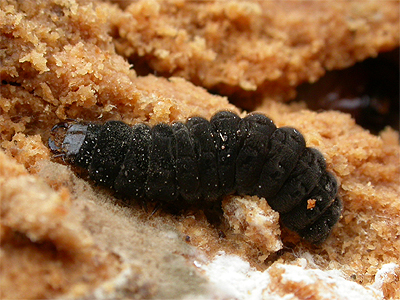
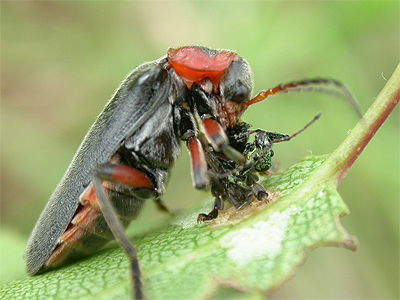
| Cantharidae larvae are velvety in appearance and live just under the soil surface or in leaf litter and are carnivorous, feeding on a variety of smaller invertebrates. We have only recorded larvae twice, with the one above (species unknown) being found within a well rotted, partly buried branch. The adults are also carnivorous insects and are greatly attracted to the nectar of flowers, but flowerheads also provide useful vantage points, so they probably catch and eat other flower visiting insects. | ||||
| ... | ||||
| Species photographs | ||||
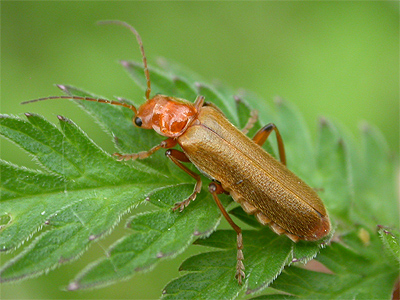
Cantharis
cryptica (Ashe,
1947)
|
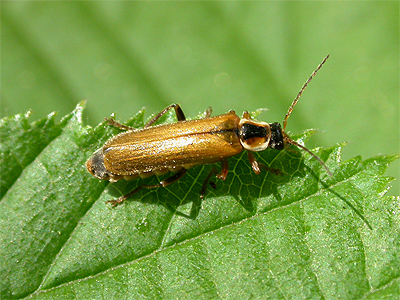
Cantharis
dicipiens
(Baudi,
1871)
|
|||
 |
 |
|||
Cantharis
figurata
(Mannerheim,
1843)
|
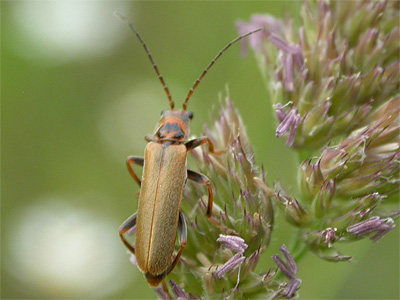
Cantharis flavilabris (Fallén,
1807)
|
|||
 |
 |
|||
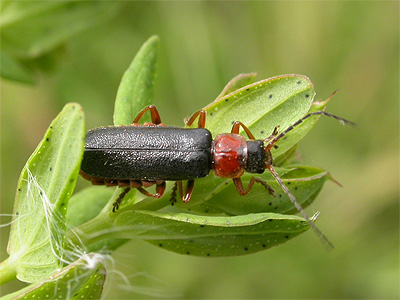
Cantharis
lateralis
(Linnaeus,
1758)
|
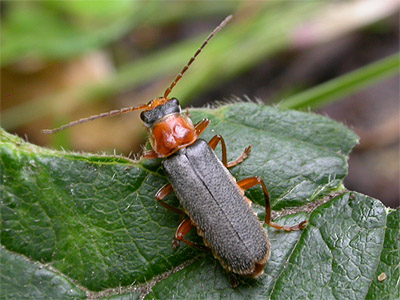
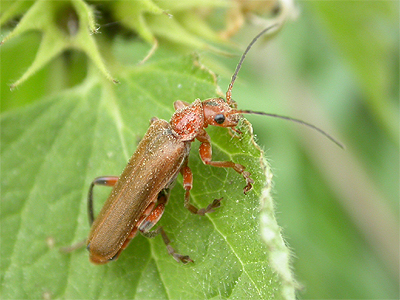
Cantharis
livida (Linnaeus,
1758)
|
|||
 |
 |
|||
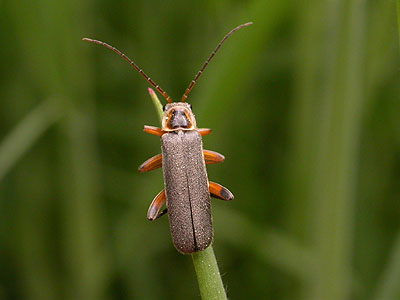
Cantharis
nigricans (Müller, O.F., 1776)
|
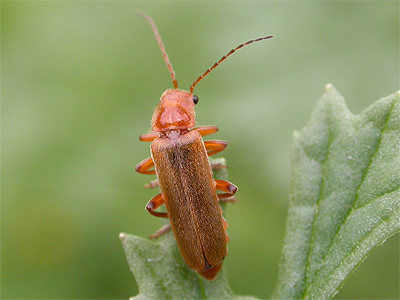
Cantharis
pallida (Goeze,
1777)
|
|||
 |
 |
|||
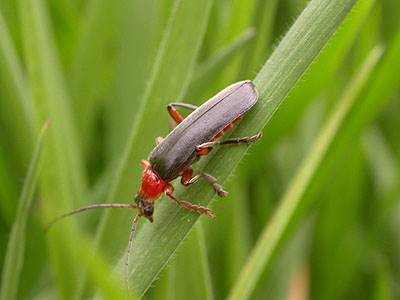
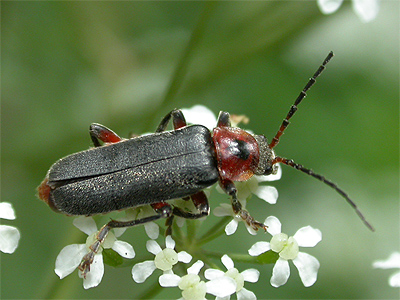
Cantharis
pellucida (Fabricius, 1792)
|
Cantharis
rustica
(Fallén,
1807)
|
|||
 |
 |
|||
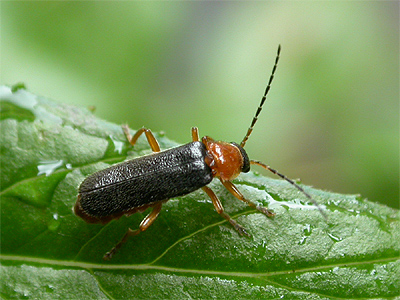
Cantharis
thoracica (Olivier, 1790)
|
Rhagonycha
fulva
(Scopoli,
1763)
|
|||
 |
 |
|||
Rhagonycha
limbata (Thomson,
C.G., 1864)
|
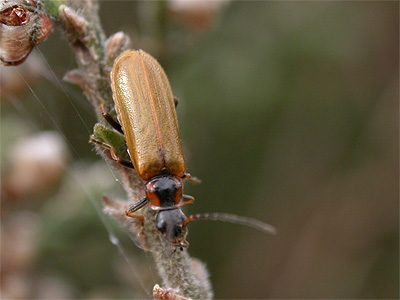
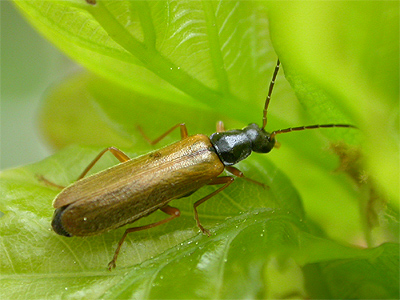
Rhagonycha
lignosa
(Müller,
O.F., 1764)
|
|||
 |
 |
|||
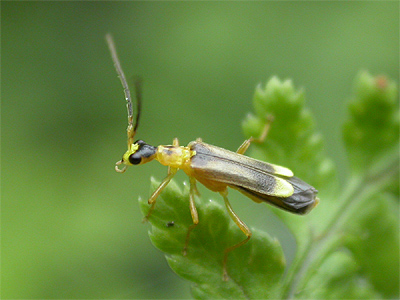
Malthinus
flaveolus (Herbst, 1786)
|
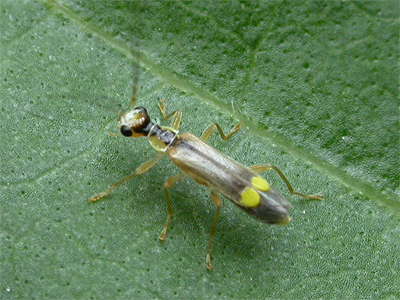
Malthinus
seriepunctatus (Kiesenwetter, 1852)
|
|||
 |
 |
|||
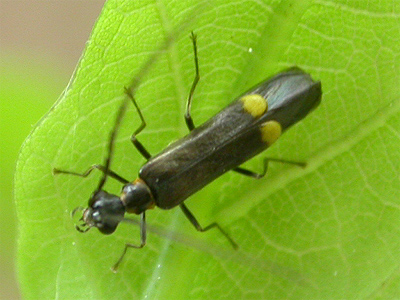
Malthodes
marginatus (Latreille, 1806)
|
Malthodes
minimus
(Linnaeus,
1758)
|
|||
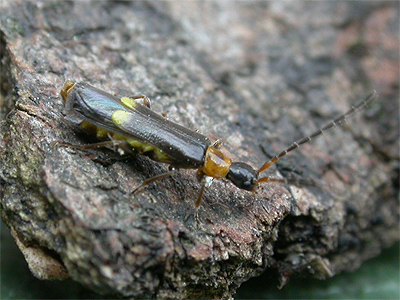
 |
 |
|||
| A checklist of Nottinghamshire Cantharidae |
| Nottinghamshire does
relatively well for its variety of Cantharidae and it
seems that just Malthodes fibulatus and Malthodes
flavoguttatus, have not been recorded anywhere in
the county in recent years. The following list of
Cantharidae recorded in Nottinghamshire, is believed
accurate. Species shown with a red asterisk, are only known from historical records only |
| PODABRUS Westwood, 1838 |
| Podabrus alpinus (Paykull, 1798) |
| ... |
| CANTHARIS Linnaeus, 1758 |
| Cantharis cryptica (Ashe, 1947) |
| Cantharis dicipiens (Baudi, 1871) |
| Cantharis figurata (Mannerheim, 1843) |
| Cantharis lateralis (Linnaeus, 1758) |
| Cantharis livida (Linnaeus, 1758) |
| Cantharis flavilabris (Fallén, 1807) |
| Cantharis nigricans (Müller, O.F., 1776) |
| Cantharis obscura (Linnaeus, 1758) |
| Cantharis pallida (Goeze, 1777) |
| Cantharis paludosa (Fallén, 1807) |
| Cantharis pellucida (Fabricius, 1792) |
| Cantharis rufa (Linnaeus, 1758) |
| Cantharis rustica (Fallén, 1807) |
| Cantharis thoracica (Olivier, 1790) |
| ...... |
| RHAGONYCHA Eschscholtz, 1830 |
| Rhagonycha fulva (Scopoli, 1763) |
| Rhagonycha limbata (Thomson, C.G., 1864) |
| Rhagonycha lignosa (Müller, O.F., 1764) |
| Rhagonycha lutea (Müller, O.F., 1764) |
| Rhagonycha testacea (Linnaeus, 1758) |
| Rhagonycha translucida (Krynicki, 1832) |
| ... |
| MALTHINUS Latreille, 1806 |
| Malthinus flaveolus (Herbst, 1786) |
| Malthinus frontalis (Marsham, 1802) |
| Malthinus seriepunctatus (Kiesenwetter, 1852) |
| ... |
| MALTHODES Kesenwetter, 1852 |
| Malthodes fibulatus (Kesenwetter, 1852) * |
| Malthodes flavoguttatus (Kesenwetter, 1852) * |
| Malthodes fuscus (Waltl, 1838) |
| Malthodes marginatus (Latreille, 1806) |
| Malthodes minimus (Linnaeus, 1758) |
| Malthodes pumilus (Brébisson, 1835) |

