Hawthorn
Moth Scythropia crataegella (Linnaeus,
1767)  |
| Status
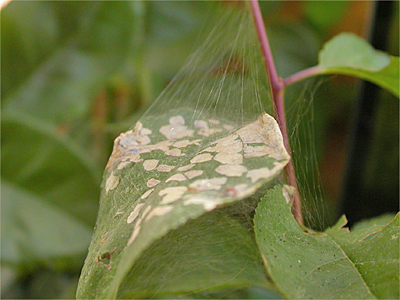
.....Larval webs in Spring are conspicuous and often
found on scrub Hawthorn Crataegus monogyna and Blackthorn
Prunus spinosa. Early instar larvae are communal and make small,
but conspicuous blotch mines and gradually develop a larval web before
overwintering. Presumed to be a fairly
widespread moth, but is probably ignored at many MV traps due to size,
although this is one of the easiest micro moths to identify. Found in a
range of habitats and regular to light in suburban areas. |
| .... |
| Photographed at Market
Warsop May 2025 |
 |
|
 |
| .... |
| Photographed
at Warsop Main Pit Top June 2014 |
 |
|
 |
| |
|
Early stages |
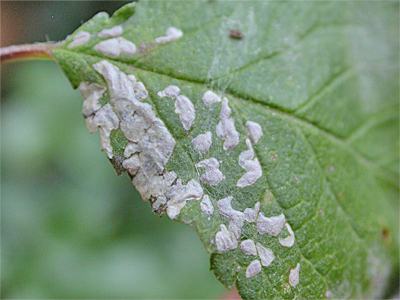
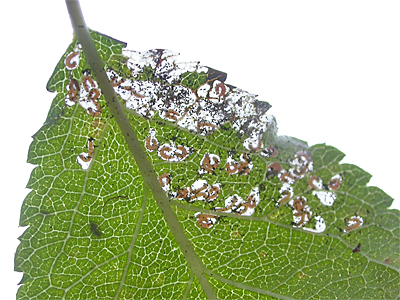
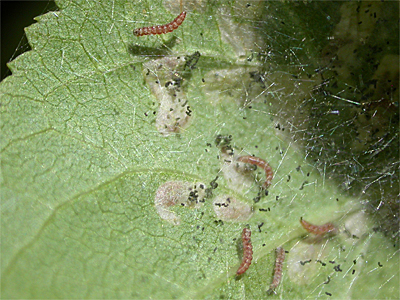
| Leaf
mines of 1st-instar larvae on Blackthorn Prunus spinosa.
Photographed at Bevercotes Pit Wood, September 2026. |
 |
|
 |
| .... |
 |
|
 |
| .... |
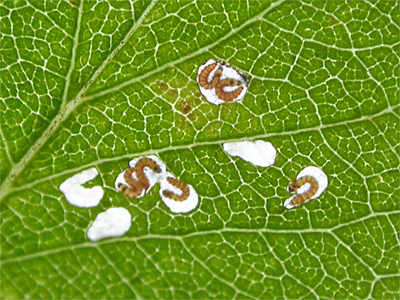
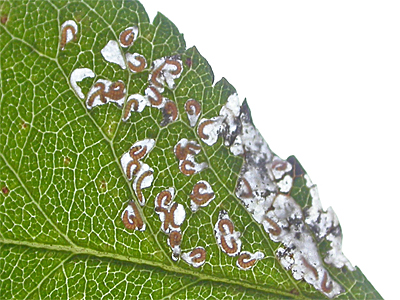
| Late
1st-instar/early 2nd-instar larvae and start of larval web. Photographed
at Bevercotes Pit Wood, September 2026. |
 |
|
 |
| .... |
|
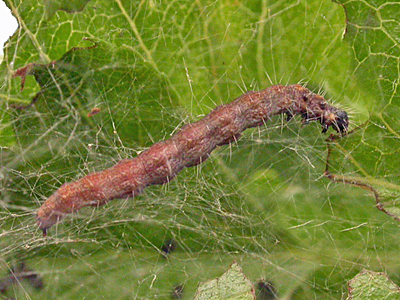
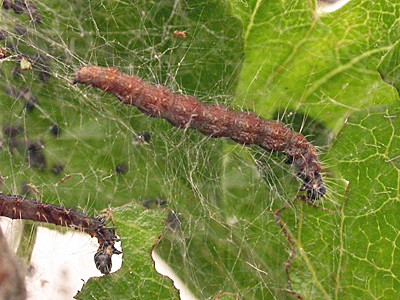
Full-grown larva. Photographed at Eakring, May 2005. |
 |
|
 |

