Hazel Pot Beetle Cryptocephalus coryli
Click here for larger Cryptocephalus coryli images
     
Many years ago, the Hazel Pot Beetle was a widespread species across the southern counties of England, but it declined greatly during the last century and is now one of the UK's most rarest insects. Since 1970 it has been found at only three single sites - in Berkshire, Lincolnshire and Surrey (Ref: Natural England) It is now classed as an RDB1 species (Species which have shown a rapid continuous decline over the last twenty years, and now exist in 5 or fewer 10km squares of the national grid)

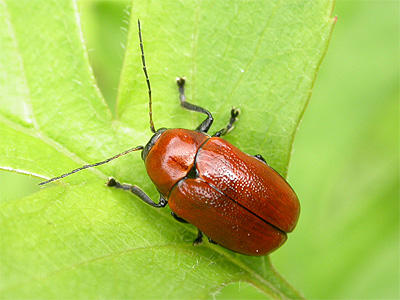
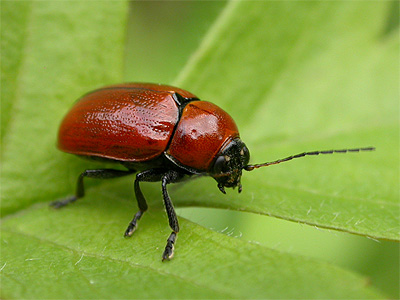
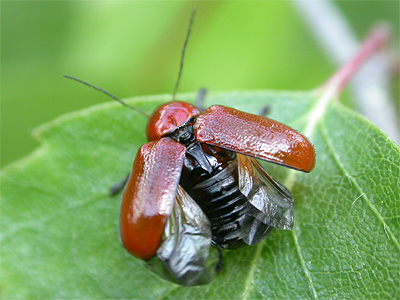
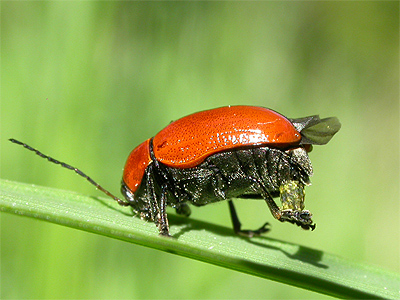
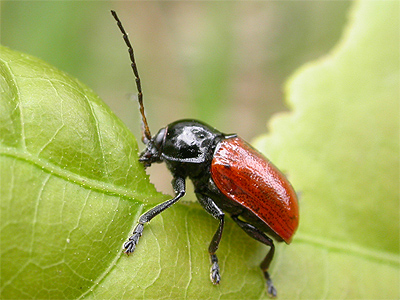
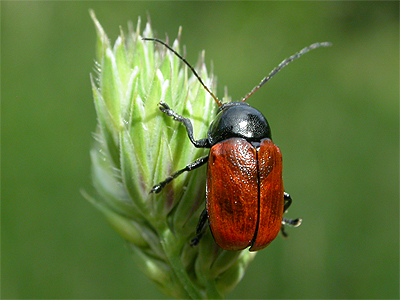
The female is shown in the accompanying photographs (the male has a black thorax) The lower left photograph, shows the female in the process of covering the egg with droppings before release.


This beetle has been the subject of a successful reintroduction programme at two Lincolnshire sites, where both larvae and adults were released. After some information requests, it is believed that no such reintroduction programme has taken place in Nottinghamshire. It now seems that this species has remained overlooked at Sherwood Forest for around 70 years, as the last records I can trace date back to 1938.


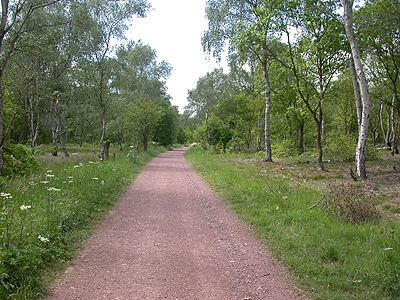
It's decline is thought possibly to coincide with the reduction in coppicing. Sherwood Forest was once regarded as being good for C. coryli by collectors in the early 1900's, when over a dozen specimens would be taken on each visit to this locality the beetles being beaten or picked from young Birches and Oaks during June. In the south, it occurs on hazel along woodland edges, rides and hedgerows, but in the north prefers a heathland habitat with Birch scrub or young trees.

C. coryli is one of the largest Cryptocephalus beetles in the UK. Females can reach lengths of 8mm, with the males reaching 6mm. The adult beetles emerge from mid-May to mid-June and has an unusual life cycle. The female covers it's eggs with droppings to protect them, and feeds it's larvae with leaves cut and dropped from the foodplant (usually Birch) The larvae remain in their protective cases throughout their life, increasing the size of it's case as it grows. The larval stage usually lasts one or two years.

     
2008 C. coryli records
All records are listed in the table below.
....................   ...........................            
Date   Site   Stage   Quantity   Notes
....................... ... .......................   ............................ ... ..... ... .....
May 28th   Sherwood Forest   Adult female   One   On grass
May 29th   Sherwood Forest   Adult female   One   On isolated small Hawthorn
June 4-7th   Sherwood Forest   Adult female   One   On Birch scrub adjacent to Birch/Oak woodland. Photographs showed this female to be egglaying. Still present on same Birch over the next few days and occasionally more active.
     
     
Insects    
Homepage    
Contents