| Bumble Bees
are known to everyone and the various species' make up
one of the most familiar group of insects. Whilst some
bees are solitary, Bumble Bees are social insects,
forming small colonies during the Spring and Summer
months. After pairing in the late Summer/Autumn, only the
young Queens survive through the Winter to start new
colonies the following Spring. But there is a seemingly
increasing trend for new colonies to be started by some
species, later the same Autumn after pairing and if
conditions are favourable. Both Queens and workers are
now sometimes recorded during mild Winter days in the
south-west UK. B.
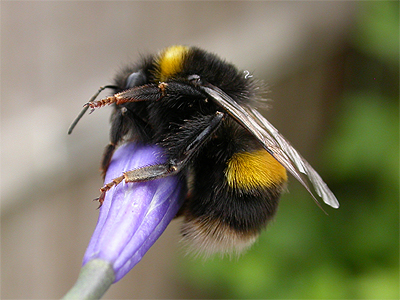
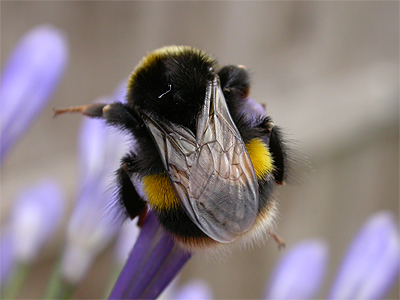
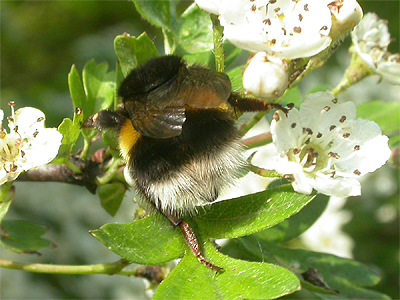
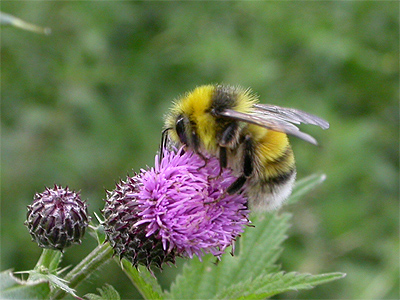
lucorum is very similar to B. terrestis and
best distinguished by it's more lemon yellow banding,
than the typical darker yellow banding of B.
terrestis . The end of the abdomen of B. lucorum
is also pure white, but it can still be confused with a B.
terrestis which has the white replaced by a buff
colouration.
|