| The
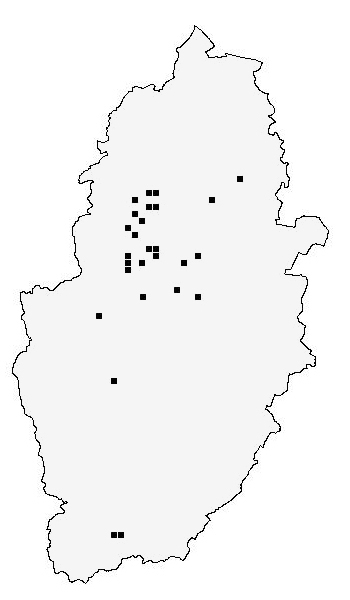
records for the Nottinghamshire distribution map
are currently provided by the following
contributors - Trevor and Dilys Pendleton.
Nottinghamshire Wildlife Trust. K N A Alexander
(Invertebrate assemblage condition at Birklands
and Bilhaugh SSSI and Birklands West and Ollerton
Corner SSSI survey reports 2009-10). Natural
England - Invertebrate Site Register 2006. Allan
and Annette Binding. Stuart Warrington. The
National Trust (Clumber Park invertebrate
records). Allan and Annette Binding (Clumber Park
invertebrate records).
Clumber Park SSSI Saproxylic Invertebrate
Survey - A report to Natural England by EMEC Ecology 2019. Brian
Wetton. Nick and Samantha Brownley. You can
contribute your own records to help us gain an
accurate status of this species in
Nottinghamshire. Send an Excel spreadsheet of
your records via the 'contact us' link at the top
of the homepage.
Updated January 2026
|